
Sunday 14th June 2026.
Mr Firbank’s Vainglory is the most perfect flower of a fatigued society which, having produced this masterpiece, can now pass on, confident of a ‘niche’, to use one of the author’s own words.
The Dial, 1925.
You’re neither unnatural, nor abominable, nor mad; you’re as much a part of what people call nature as anyone else; only you’re unexplained as yet – you’ve not got your niche in creation.
Radclyffe Hall, The Well of Loneliness, 1928.
I do have a fondness for the word ‘niche’, and not only because it rhymes with ‘quiche’.
In terms of making art, ‘niche’ is sometimes used interchangeably with ‘cult’. But there is an important distinction.
‘Cult’ suggests a small following, but it is one where the fans can go a bit too far. There may be strong drugs, secret ceremonies, conspiracy theories, not washing, that kind of thing. Some examples of cult novelists, if rather different ones, are William Burroughs, Baron Corvo, and Ayn Rand.
‘Niche’, on the other hand, is much more civilised. Niche suggests a small following, but it is one where the fans are graceful in their ardour. Niche creators are people like Ronald Firbank, Brigid Brophy, the musician Momus, whose memoir is simply titled Niche, and, I like to think, myself.
Cult authors often reject the world at large. They go off-grid and into jungles. They seek astral planes, menhirs, suspicious herbs and even more suspicious beards. Niche writers shave and take a folding chair.
A niche writer may be as strange and as difficult as a cult writer, but they still tend to enjoy the comforts of civilisation, with its libraries and its dry cleaners and its peacock-shaped coat hooks in the toilets (I am specifically thinking of the upstairs toilets at Café 1066 in the Priory Meadow Shopping Centre, Hastings).
Niche writers still want a place in the world, even if it’s just a rented room. Hence the wider meaning of niche: a little slot to fit into.
**
In this spirit, last week I hand-delivered copies of my nichebook to be sold at The Waves Bookshop, at 10 Claremont, Hastings. The Waves only opened three weeks ago, and I am overjoyed that it exists. It has an emphasis on new literary writing, classic gay books, arty magazines, Virginia Woolf books (obviously, given the shop title), and it also doubles as an art gallery. The owner is Jamie Atherton.
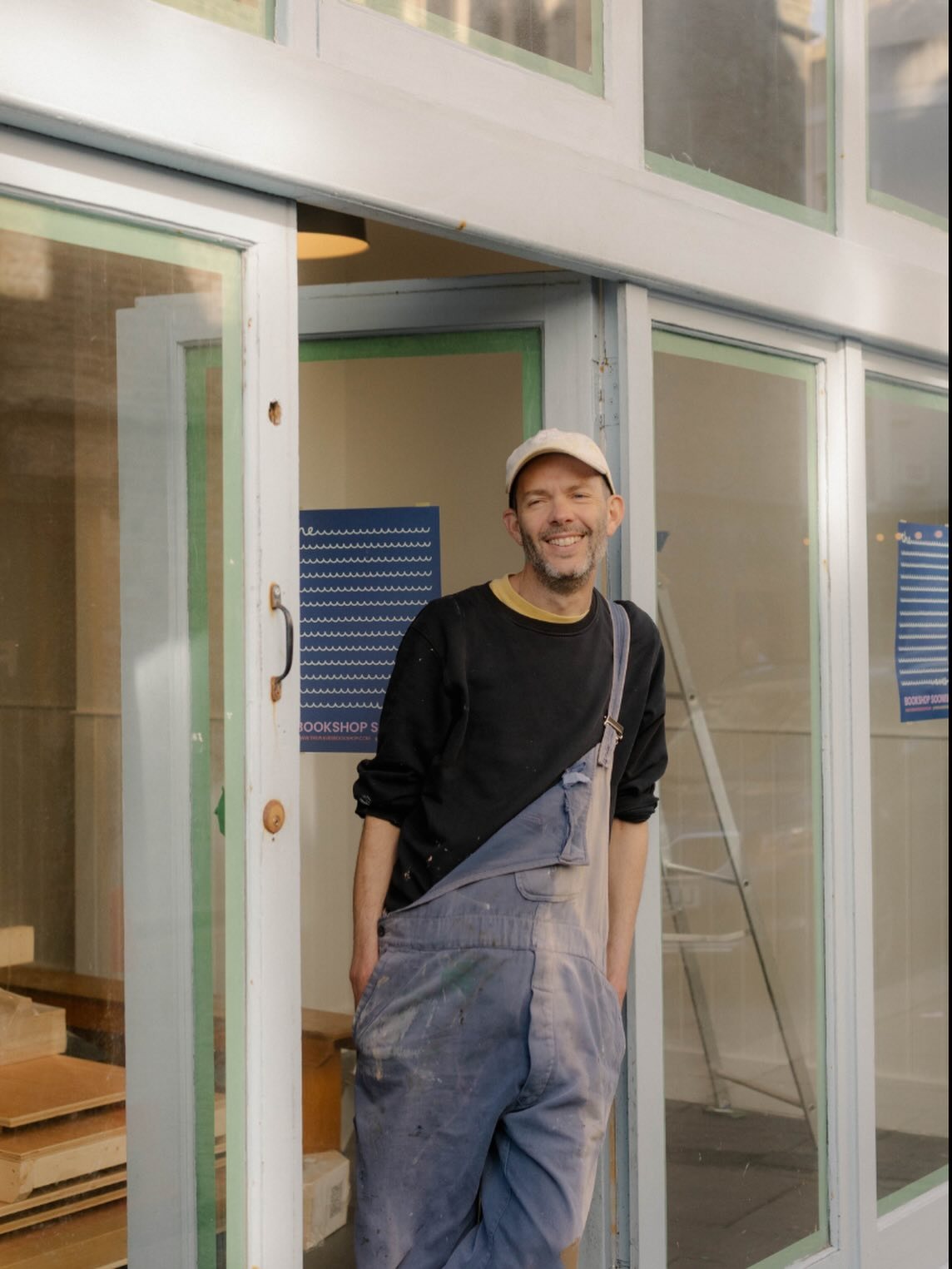
If you are going to open a groovy new shop in Hastings, it helps to be called Amy or, if male, Jamie. There is the art, embroidery and stationery shop Bus Stop Studios, at 53 London Road, run by Amy Burt, where I get my cartridges of purple ink for my Kaweco fountain pen. Then there is the pleasant Folks coffee shop, a few doors closer to the sea at 45B London Road, which is run by Amy Dutton.
The argument for ‘Jamie’ as a male counterpart for ‘Amy’ recalls the London gender-flipped production of the Sondheim musical Company, which I saw in 2018. The character of Amy, the neurotic bride-to-be who sings the fast, hilarious showstopper ‘Getting Married Today’, was turned into a gay groom-to-be, Jamie. In that version he was played by Jonathan Bailey, who has since gone on to be the love interest in Bridgerton and the Wicked films.
Hastings HMV sells a Jonathan Bailey calendar, alongside ones for Taylor Swift and Harry Styles. I couldn’t see a Dickon Edwards calendar there, but there’s still time.
Company is also the musical that includes the song ‘Being Alive’, an earlier incarnation of which had the rather good title of ‘Multitudes of Amys’ . Now, when I think about the shops of Hastings, I think about multitudes of Amys.
Tough Love Records, which has just moved from Bohemia Road to 8 London Road, even closer to the sea, is run by an Anja. So that’s the end of that theory.
This splendid emporium stocks a decent range of new CDs as well as new vinyl, and I still buy CDs, still loving their compact smallness, not to say their cheapness compared to new vinyl. Tough Love also has an attractive mini-café by the window, with sofas, where I can vent my overcaffeinated opinions about music.
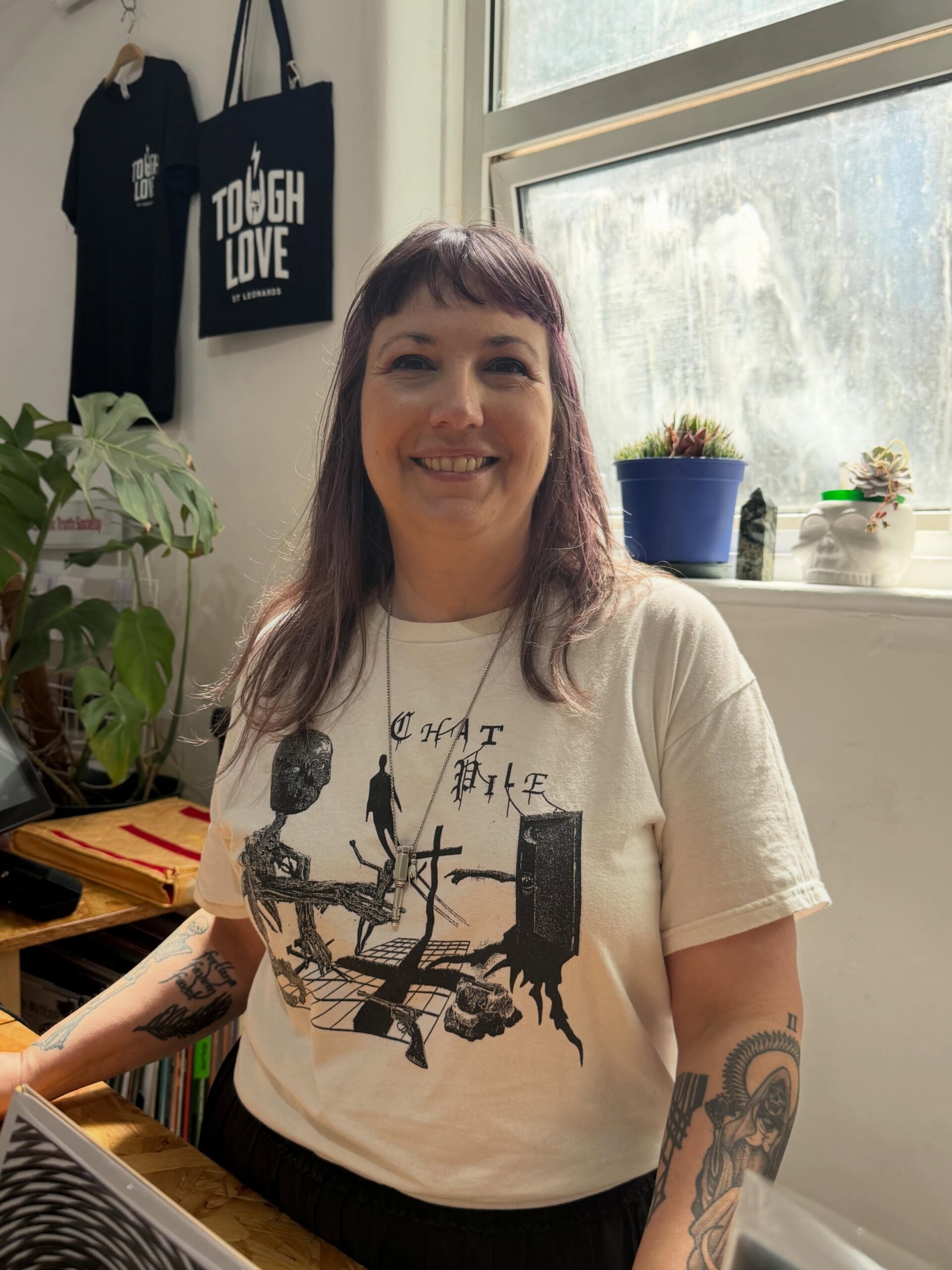
Anja Petitto is a fan of heavy rock, but she also loves Sparks, Abba and Beyoncé. While I was there last week, sipping my oat Americano, she played me the new Blood Incantation album, All Gates Open, which was singled out for praise in the latest issue of The Wire magazine.
One might think, given their name and their usual genre of death metal, the Blood Incantation album would have noisy rock songs about nasty things happening with corpses. In fact, the album is ambient and quiet and dreamy in the Brian Eno style. This is a healthy reminder that genre can be a departure point as much as a destination, and that a cult band can make a niche record.
**
Fans of niche writers do not hold conventions, they hold symposia.
On Friday 22nd May 2026, I was invited to London to speak at a symposium for Ronald Firbank, held on the occasion of the centenary of his death.
The venue was the Warburg Institute in Bloomsbury, a building affiliated with the University of London. When I joined the Institute to use its library a few years ago, the staffer on the desk recognised me from the 90s band Orlando. ‘I was a fan, back in the day’. She was perfectly matter-of-fact in saying this. Proof, perhaps, of my own niche status.
The main speaker was the novelist Alan Hollinghurst, whose talk on Firbank (‘The Firbank Century’) was a properly crafted literary piece, like a Henry James short story. One hopes he will publish it soon, so it can reach the wider audience it deserves.
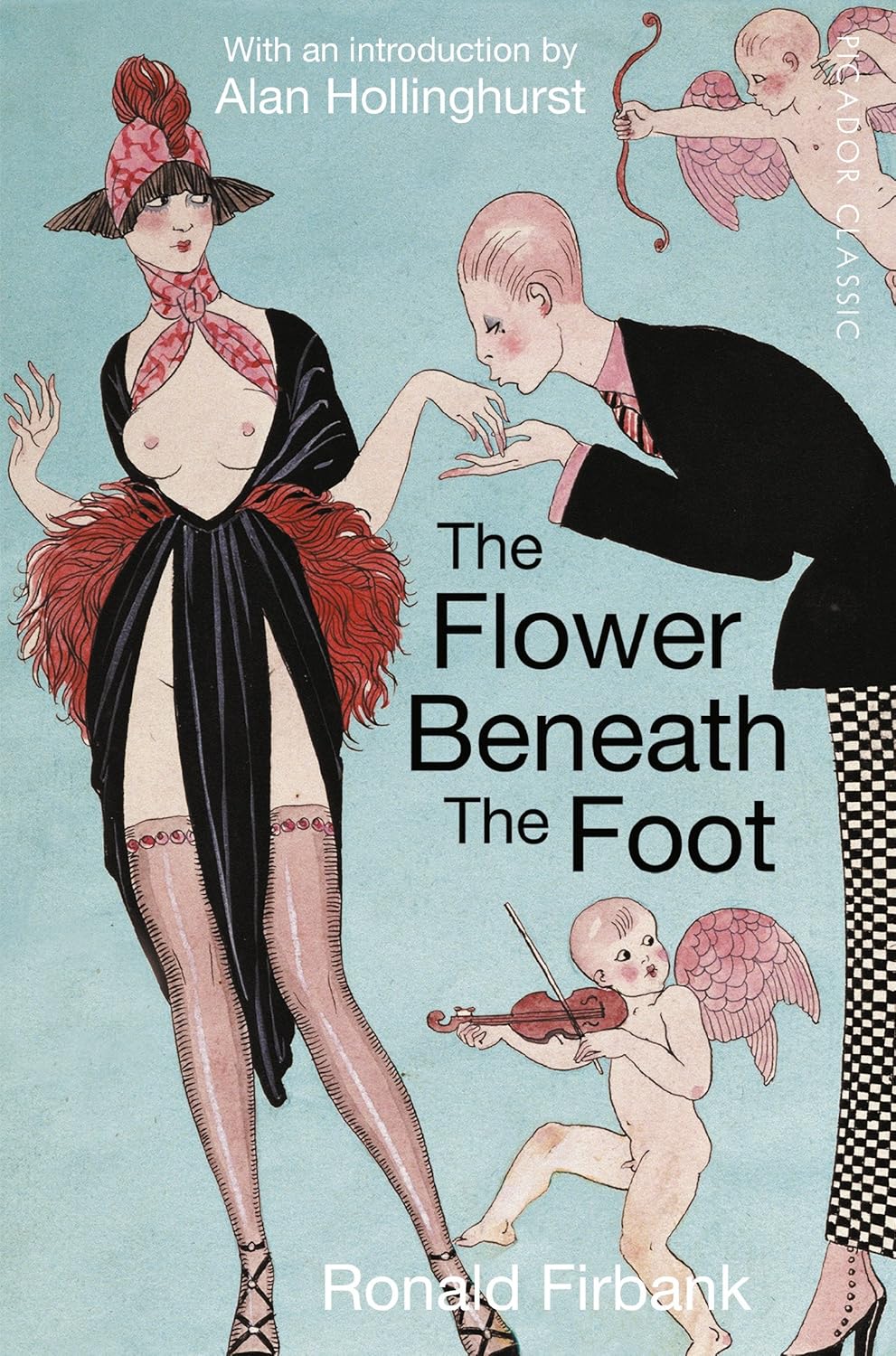
My own talk was on the history of the word ‘Firbankian’, and how it was used in magazines like Vogue in the 1930s as a synonym for high camp. What’s particularly interesting is that the phrase ‘high camp’ itself didn’t exist in print until the 1950s, when Christopher Isherwood coined it for his novel The World in the Evening. In the 1930s and 40s, magazine writers who wanted to imply that sort of thing reached for ‘Firbankian’, and their readers understood.
A few days after this talk I received a kind email from the author Richard Davenport-Hines, who was in the audience. He said I had ‘just the right combination of frivolity and scholarly thought’.
The symposium featured several other speakers, a short film, and a rehearsed reading of Firbank’s play The Princess Zoubaroff, the cast of which included Miranda Richardson.
Everyone involved in the Firbank symposium was thoroughly fragrant. I chatted to Susannah Clapp, who went on to write up the symposium for The Observer. The fact that the Observer was interested shows that writing about a niche writer never feels like a personal indulgence. Writing about a cult writer, on the other hand, carries that risk.
**
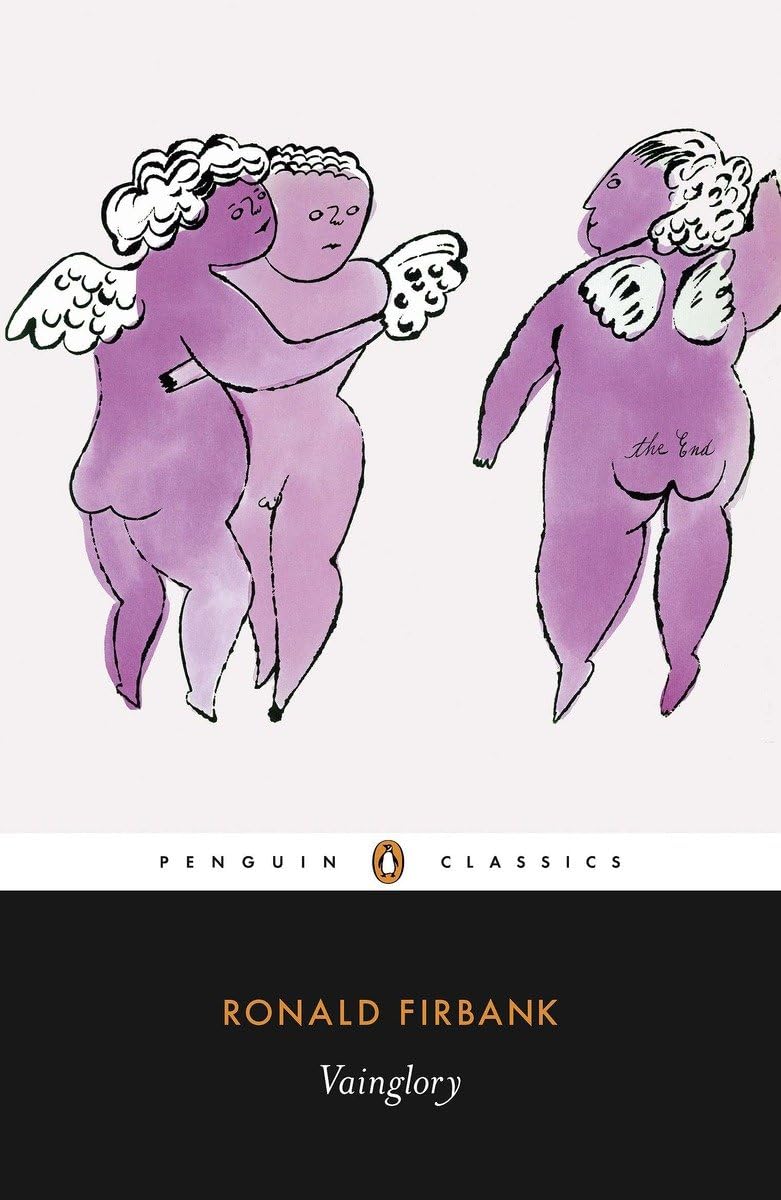
Among the symposium’s external events was a walking tour of Firbank’s London hosted by Richard Canning. I love that Professor Canning not only edited the 2012 Penguin Classics edition of Firbank’s Vainglory but that he also performed in a student comedy troupe with Stewart Lee and Richard Herring in the 1980s; they were called the Seven Raymonds. These worlds are not so different. Firbank’s work is a form of strange and intelligent comedy in prose; Stewart Lee’s stand-up comedy features jokes about how he’s too strange and intelligent for most of his audience.
This is the ideal: to remain true to yourself, yet still appeal to the common niche-ness in enough people to make a living. Everyone feels niche at some point; it’s just another word for lonely.
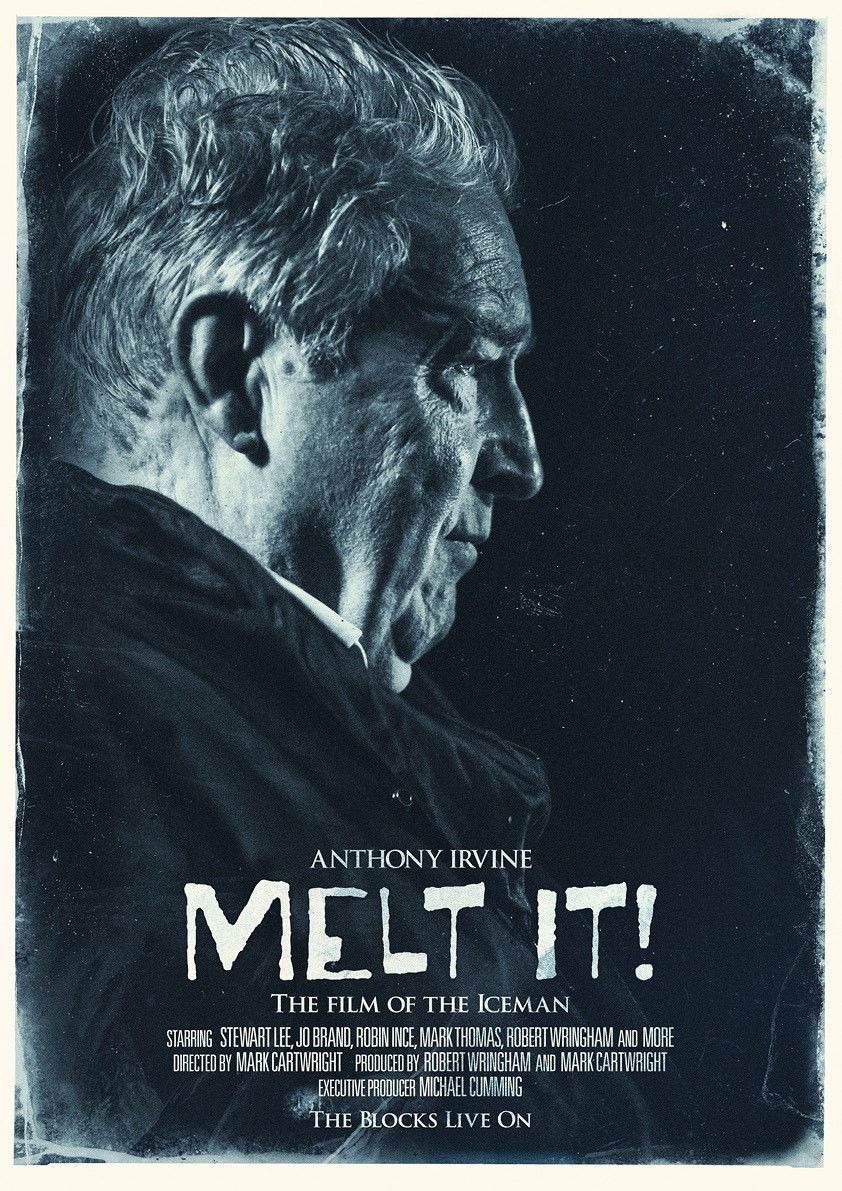
There is a new film on this subject that I’m keen to see. An enigmatic comedy performer from the 1980s has just had a documentary made about him: the Iceman, aka Anthony Irvine. His comedy act was to melt a block of ice onstage in various strange ways, and that was it. Anyone who saw him never forgot him.
The film features Stewart Lee and Jo Brand, among others, and is called Melt It! The Film of the Iceman. It is about to be screened at various UK venues over the summer, and I strongly recommend it. It makes perfect sense that one of the producers, Robert Wringham, is also the publisher of my diary book. He clearly believes in flying the flag for niche.
**
Notes
Susannah Clapp’s article about the Ronald Firbank centenary symposium, ‘Bright Young Thing’, was published by the Observer on 30 May 2026. Link: observer.co.uk/culture/in-real-life/article/bright-young-thing
The trailer for Melt It! The Film of the Iceman is here: youtu.be/54J_1Be63q4
Melt It! will be screened at selected cinemas across the summer, including St Leonards-on-Sea (Kino-Teatr) on 19th July, and London (The Bill Murray) on 23rd August. For further info and other screenings, go to: wringham.co.uk/film
This online diary was begun in 1997. It is thought to be the longest running of its kind. The archive contains over twenty years of exclusive knowledge, all searchable and free to read without adverts or algorithms or clickbait. It depends entirely on donations by readers to keep it going. Thank you!

Tags: alan hollinghurst, anthony irvine, hastings, melt it the film of the iceman, ronald firbank, susannah clapp, the iceman, tough love records, warburg institute, waves bookshop



