Anecdote In Silver Velvet
I’ve officially confirmed which degree course I’m going to do. BA English, at Birkbeck University, starting this October. Four years, part-time, evening classes, and I still have to find paid work to support myself while I’m doing it.
***
Monday March 28th: I’m interviewed at Birkbeck for my other choice, BA Creative Writing. One of the interviewers is Jonathan Kemp, author of London Triptych. I’m offered a place on that too, so it’s down to me to make the big decision. After closer studying of the courses, it turns out English has the option of taking some creative writing-type modules, so in typical cake-and-eat-it approach, that’s what I go for. These are both incredibly popular courses, and after much rejection by the world of work lately, it feels so gratifying to find acceptance in the world of academe, twice over.
The Birkbeck building is at 43 Gordon Square, so I’ll be poring over the works of Ms Woolf close to where she actually lived. Â The houses have been knocked together and are now something of a warren of classrooms and corridors. If you get lost there, as I did, you can find yourself in an underground cinema (home to Birkbeck’s film course) or a secret pocket-sized cafe.
***
Sunday April 10th: To an elegantly crumbling room at 33 Portland Place, now recognisable as the location for Geoffrey Rush’s consulting chambers in The King’s Speech. A few weeks ago, at one of the Last Tuesday Society’s balls, I bumped into Rachel Garley, partner of the late Sebastian Horsley. She said she wanted to give me one of Mr Horsley’s suits. I was honoured, and agreed.
So here I am in the King’s Speech room, with a long mirror, a rail of clothes and a dozen other gentlemen standing around in their socks and pants – other suit recipients – trying on the accoutrements of the deceased dandy. I know one of the others, Clayton Littlewood, whose book of modern Soho anecdotes, Dirty White Boy, featured Sebastian H on the cover.
In my case, Ms Garley has picked out an ensemble specially for me: a silver velvet 3-piece with pink lining, plus a large-collared white shirt and a fat pink tie. There’s a photograph of Mr H wearing it in his Guardian obituary.
Ms Garley’s plan is to have a big dinner at the Ivy in Mr H’s memory, with all the men wearing his suits and all the women ‘dressed up the way he liked them’ (stylish with decolletages to the fore, I think). But this will be in the autumn, as it’s getting too warm for velvet suits. Well, for other men anyway.
While this suit-giving (I refuse to say ‘gifting’) ceremony is going on, we’re told the jacuzzi room in the floor below is being used to shoot a porn film. It’s exactly what Mr Horsley would have wanted.
I wear the suit straight to a party that evening: a food & drink do for Dedalus Books in Camberwell. There’s a connection: Sebastian Horsley wrote an unkind foreword to Dedalus’s Decadent Handbook. I recall that he still turned up to the book’s launch party, though.
At the party, the suit is anecdotal gold. Or more precisely, anecdotal silver. People ask me about the suit – and who can blame them – so I get to tell the tale. And if they’ve not heard of Sebastian Horsley, I tell the tale of him too. I’m worried about going full Ancient Mariner, though, with so much to say about such a man, and such a life. How to know when to stop?
I suppose I could just say, ‘It was a gift from a deceased dandy’ and leave it at that. But if they do leave it at that, I rather think I’m at the wrong party.
***
Meanwhile, the Scottish Ballet are mounting an interesting new production of Alice In Wonderland. Their Humpty Dumpty is based on Leigh Bowery, while the Mad Hatter is inspired by Sebastian H. From a piece in the Herald Scotland:
The Hatter who’s on stage in the Alice ballet owes his eye-catching appearance to the late Sebastian Horsley, the self-styled Soho dandy who died last year. ‘Horsley was a tremendous peacock, wonderfully eccentric, full of flair,’ says [designer Antony] McDonald with undisguised relish. ‘There are so few genuine eccentrics around these days.’
Their costume designs are here.
In fact, I mention the Scottish Ballet show to Rachel and the others while I’m at the suit ceremony.
Rachel: I didn’t know that. How did you hear about it?
Me: I have a Google Search alert. It sends me an email whenever Sebastian’s name turns up in a newspaper.
Rachel: Oh yes. He had one of those, too.
Tags:
birkbeck,
rachel garley,
Sebastian Horsley,
suits
Not Butch Enough For Twain
Friday: I pop into Gay’s The Word bookshop on Marchmont Street. Not only is it still going after Borders and Books Etc have toppled (and going for some decades now), but there’s a healthy amount of customers inside browsing away.
Despite owning a Kindle – because I own a Kindle – I still love to purchase nicely-designed paper books to vary my reading life. Independent bookshops are obviously the place to do it. Today I pick up three books for a tenner: Truman Capote’s Children on Their Birthdays, Carson McCullers’s Wunderkind, and James Baldwin’s Giovanni’s Room. The first two are from Penguin’s Mini Modern Classics range, 50 titles celebrating 50 years of their Modern Classics; very cute ultra-pocket-sized grey paperbacks at £3 each. The Baldwin edition is from the Penguin Great Loves range: A-sized pocket paperbacks with a little logo of two penguins about to snog. Perfect examples of the way paper publishing should be going: beautiful & compact and lighter than a Kindle, so even fans of e-books will be smitten. If Apple made paperbacks, this is what they’d look like.
A-sized paperbacks were what Penguin started with in the first place: those classic stripey covers in orange or purple from the 30s and 40s, the design available now on mugs and tea towels and pencil cases, but not for any new fiction. It’s the size I care about. The standard Penguin paperback size for new novels is like most UK paperbacks: B-format, a bit too big for pocket-sized.
Yet this seems to be a uniquely British taste. At the branch of Foyles in St Pancras, they have a range of French language bestsellers, including your Dan Browns and Stieg Larssons. But they’re all A-sized pocket paperbacks. So why do British readers like their paperbacks to be bigger than the French?
I’m guessing it’s a kind of snobbery. The A-format is looked down upon as more trashy (and wrongly so, to my mind). It seems reserved purely for mass-market genre titles, eg those Terry Pratchett paperbacks with the cartoony covers. Or quality reissues of much, much older material, like the Penguin Great Loves, Great Ideas and Mini Modern Classics. Literary and new and on paper cannot be portable, apparently. They tend to be either C-sized paperbacks (even bigger) or cumbersome hardbacks. The newly published Mark Twain autobiography is a hardback of wrist-snapping height and breadth. I’m keen to read it, but I’m not butch enough to lift it up in the shop. Thankfully, there’s a Kindle version. So that’s one point scored for e-books right there: they’re perfect for bigger books.
This also shows up the increasingly anachronistic practise of ‘two tier’ publishing in the UK: a hardback first, then a B-format paperback edition a year later. I’ve read an interesting article suggesting that Radiohead’s album ‘business model’ (I do hate that phrase) should make publishers sit up and take notice. The band releases albums as cheap digital MP3 versions alongside more expensive boxed CD and double vinyl formats. So the collector’s urge to own something pretty on their shelves is sated separately from the basic urge to consume the art itself, and (crucially) at the same time. E-books, thankfully, are now being released alongside the hardbacks, so that’s what weak-wristed portability fans like myself go for. But this leaves booksellers missing out. Bookshops can’t sell e-books, but they can sell paperbacks. And I like the paper experience too, if it’s light and compact. Not just me, either:Â I-Phones and the success of Penguin’s aforementioned reissue ranges are proof that an awful lot of people want things to be small & cute, whether paper or digital.
So maybe this era of e-books and bookshops struggling to survive will force paperbacks to come out at the same time as hardbacks AND be small & pretty. In which case, speed the day.
Tags:
Books,
e-books,
kindles
Those SEO Gold Mine Blues
I have something of a recurring headache, which I think is part of a sinus-y head cold, but that’s still no excuse for going for days without writing. If I’m going to start a degree in the Autumn, I have to nip this particular bad habit in the bud, or else it’ll be a waste of everyone’s time.
I’ve written an article about the history of the Bohemian Bedsit for the New Escapologist Magazine, issue #5. Did lots of Proper Research, so hopefully readers will come away All The Better. It can be purchased at http://newescapologist.co.uk/shop/
I’ve also been invited to give a 15 minute talk at The Camden School Of Enlightenment on May 10th. My contribution is called A Field Guide To Fetishes. I’ll be discussing the strange and wonderful words given to lesser-known naughty inclinations, such as tripsolagnia, the sensation of arousal from having one’s hair shampooed. The event is free. More information at http://www.csofe.co.uk/
Money! I am contacted out of the blue by someone who does ‘SEO’ advert placing. As in Search Engine Optimisation. It’s a phrase that currently crops up all the time in job ads: the skill of getting a company’s website ranking high in Google searches. My diary has a certain value in the SEO stakes purely by lasting so long. If you start a blog in 1997, by 2011 there’ll be so many links to it scattered around the Web, your Google ranking will be high by default. It’s one reason why searching on Google for ‘Dickon’ will get this diary first, ahead of anything to do with The Secret Garden or that Dickon out of the Tindersticks who does music for Oscar-nominated films. Like some grizzled prospector of the Wild West, I sit here on top of my SEO gold mine, awaiting offers.
First up this month is an offer from a business card company. They want me to add the phrase ‘business card’ to one of my more popular diary entries, and link this ‘search term’ to their website forever. In return, they pay me twice my weekly rent. Â I do it. As it is, I use the company already, so no moral dilemmas there. It’s hardly Iggy Pop and his irksome car insurance puppet.
If you’re reading this and can help me exploit this accidental asset, please do get in touch. Â I rather like the idea of this diary finally earning me a living.
***
Today: I sit in a St Pancras cafe and write a letter on headed notepaper snaffled from the Oxford And Cambridge Club. It has an unmarked entrance on Pall Mall, and is where my kind friend Minerva Miller took me for lunch last Friday. Such a beautiful place. No mobile phones allowed, high ceilings, ornate lounges and dining rooms, billiard rooms, squash courts, plush sofas everywhere, phones with which to order a gin and tonic, newspapers and magazines, green baize tables, chess boards, and library rooms with high-backed armchairs to fall asleep in. One room is decked out in more feminine decor: champagne gold & emerald green, alongside rooms in the more traditional gentlemen’s  club colours, burgundy and brown, the rooms of scenes from Yes Minister.
***
Last Thursday night, March 17th: I look after the house and hound of Linda Seward. The house is in Primrose Hill, stuffed with books and art and no TV, while the dog is Rhum, a 15-year-old Border Terrier who’s a little hard of hearing. Rhum is pictured here by Ms Seward:


Saturday 19th March: I meet up with La John Joseph, who has a new pop persona, Alexander. We visit the Robert Mapplethope exhibition, as curated by the Scissor Sisters, then walk through Soho to have tea at Fernandez & Wells in Beak Street. JJ and his bright red raincoat get him stopped twice to have his picture taken by those ‘street style’ photographers that lurk on every Soho corner. They’re not interested in me. I wonder if I’m starting to look more normal.

***
Also today: I stop off at the Boogaloo and meet Mr Jupiter John, who says kind things about my diary, buys me drinks and gives me cash to become a Diary Angel. At the bar I meet Ms Kate McGann, actress and cousin of those various McGann acting brothers. She’s just appeared on the TV dating show Take Me Out. The same edition included Ms Marysia Kay, actress and actual witch, who starred in a pop video for my website host Rhodri Marsden, which I also popped up in. I say all this to point out what a connection-fest the Boogaloo is.
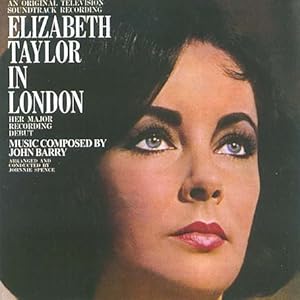
Elizabeth Taylor dies. I dig out my CD of Elizabeth Taylor In London (played in the Boogaloo when I DJ’d there). It’s the soundtrack to her 1963 American TV special, where she’s filmed swanning around the capital’s landmarks in various Dior ensembles, all to a swooning John Barry score. Occasionally she stops to recite London texts, chosen herself. They include Wordsworth’s Westminster Bridge, Queen Elizabeth I’s  Speech to the Troops at Tilbury, and Churchill’s VE speech to the crowds in May 1945:
You have been attacked by a monstrous enemy but you never flinched or wavered. No one ever asked for peace because London was suffering. London, like a great rhinoceros, a great hippopotamus saying ‘Let them do their worst. London can take it.’
London could take anything.
Tags:
Alexander,
Boogaloo,
La John Joseph,
London,
Oxford And Cambridge Club,
Rhum,
SEO hustling,
tea
Bloomsbury Spring
The daffodils are out, spring is in the air and there’s a spring in my step.
My self-esteem has just taken the largest boost it’s had in a long while. I’ve just been accepted for the BA English course at Birkbeck University. Bloomsbury campus, evening classes only, four years, starting in October.
Some friends have said there was never any doubt I’d get the offer, which is very kind of them. But as my formal education stopped at the age of 17 when I abandoned my A-levels, I was worried that Birkbeck would insist I take those again first, or do a Certificate of Higher Education. Thankfully my various doings with words over the years have been enough to convince the tutor who interviewed me today, in a sunny office in Gordon Square. I’m officially capable of doing a Proper Degree.
I’m now waiting to hear back regarding my other choice, BA Creative Writing. If CW accepts me as well, I have to decide between the two subjects. Creative Writing might be better in helping me get novels and scripts written and improved, but English would give me an all-round expertise in everything from Chaucer to Hanif Kureishi, closing the gaps in my knowledge and improving my writing. I think I’ll have to speak to the tutors and ask them how the courses differ in more detail, before I make my choice.
However, if CW doesn’t have me in the first place – creative writing courses are notoriously popular – well, it’s all… academic.
Either way, I’m doing a degree. It feels so good to be accepted and believed in by a university, after a lot of recent rejection from the World Of Work and feeling the weight of my past failures. My 40th birthday is a few weeks before the term starts in October. For the first time, I’m actually looking forward to it.
Tags:
birkbeck,
degree,
happiness
What To Give William Blake
Lots of moaning to myself lately.
A request from the singer-songwriter Lettie. Would I like to play guitar and sing for her at a gig in a few weeks’ time? I tentatively agree. Last night: she comes to the Boogaloo, buys me drinks and lends me an acoustic guitar.
This morning I try playing the thing. It’s the first time there’s been an instrument in my home since I sold them all 18 months ago. I think it’s also the first time I’ve picked up a guitar since the last Fosca gig in Sweden, Spring 2009.
I’d like to say my fingers fall easily onto the guitar and it feels like coming home. Not a bit of it. The strings cut into my fingers and it hurts and I’m not sure I feel like a guitarist any more. But then, I’ve always found acoustic guitars so much harder to play than electrics. I decide to try again later.
*
This week I upload my CV onto a job-matching website. It returns just one vacancy. Street fundraiser. Also known as ‘charity mugger’ or ‘chugger’. ‘Do you want to develop your interpersonal skills?’ says the ad. By which they mean, do you want to annoy innocent passers-by and risk being punched fully in the face? I sympathise with the people who do this job, but it doesn’t change my moral opposition to it.
A couple of friends say I should just take any job going. But I can’t do what I can’t do. It’s like asking a man with vertigo to clean the windows of a skyscraper. He could do it, but he wouldn’t last and he wouldn’t be at all happy.
Not that I’m happy being on the dole. As soon as I think I’m managing, something comes along like a dental check-up bill –even at the NHS level – and I have to cancel all going out for the next fortnight.
Here’s hoping something comes along soon.
On top of this I’m angry at my shoes. New smart flaneur-ing boots, a present from my parents, who were appalled that I couldn’t afford to replace my disintegrating old pair. Although they fitted okay in the shop, they’re still pinching my feet painfully after ten days of wear. I’ve tried using a softening spray (£7, more pain) but the pinching persists.  Trouble is, I don’t think you’re allowed to exchange shoes once they’ve clearly been worn  – that’s the Catch-22 of footwear.
The temperature has dropped close to freezing and I can’t afford to heat the room all day. So this morning I wander outside, shivering and feet-hurting and guitar-resenting and penniless and feeling utterly sorry for myself. If in doubt, go for a walk.
In Highgate Village, I bump into Brian David Stevens, the photographer whom I last spoke to at the Felt book launch. He invites me to a private view this afternoon in London Bridge. It’s free and sounds interesting, but I can’t even afford the return bus fare.
Then I think, stuff it, I’ll just walk. It’s all downhill, and I have all the time in the world. So I do it. Six miles, from Highgate to Archway, down the full length of Holloway Road to Highbury Corner, through Islington to Old Street, down to Moorgate and Bank and across the river. Proper flaneur stuff. It warms me up, it’s good exercise, it might help to make the boots stop pinching, and by the end of it I think I’m a kind of New Romantic Iain Sinclair.
The exhibition in London Bridge is called Civil Unrest, featuring photos from the recent London protests. The venue is the Depot, where I’ve DJ-d in the past. A series of cavernous black warehouse spaces underneath the arches of London Bridge station. The photos are blown-up prints pasted around the dark walls in suitably gritty fashion. There’s crowd control barriers, piles of rubbish in corners and it’s all very ‘themed’. The staffer on the door is dressed in full riot squad gear, complete with shield, while the free drinks – brandy punch – are served in tin campsite mugs. I say hello to Marc Vallee, another of the photographers.
On the way back, I stop off at Bunhill Fields to look at William Blake’s grave. There’s a pile of people’s tributes on top of the stone: mostly pennies and cents, a few seashells and stones, some earrings. And more unexpectedly, an FM radio attachment for an iPod.
Tags:
brian david stevens,
lettie,
London,
marc vallee,
moaning,
money,
shoes
Made In Balham
Last Tuesday: I make the pilgrimage to Balham. Although it’s my first visit, I share some DNA with the area: it’s the birthplace of my paternal grandfather. I’m there to visit The Exhibit, London’s smallest cinema. There are just 24 seats, comprising 12 highly comfortable sofas on raked steps. Ideally one needs to bring a friend, or risk sharing a sofa with a stranger.
The tickets are only £5, and they include a free bowl of popcorn. The Exhibit has a regular programme of second-run films not yet out on DVD (I see Made In Dagenham), and there’s a proper lit-up marquee sign above the entrance, making it feel more like a cinema, less like a screening room.
Made In Dagenham is a colourful dramatisation of the late 1960s women’s strike at the Ford motor factory. It’s an important history lesson, but the film keeps the politics balanced with plenty of humour and pathos. Miranda Richardson is particularly good as Barbara Castle.
What with this and The King’s Speech and The Social Network however, I find myself bristling at the inevitable captions at the end, telling you how important the events you’ve just seen are, and what the real people did next. They never tell you which bits have been invented for the sake of the story. I’ve found out myself that Sally Hawkins’s heroine in Made In Dagenham and Zuckerberg’s pivotal girlfriend in The Social Network are completely made up. This week I find myself yearning to see something entirely possible, but entirely fictional. No historical events, no science fiction or ballerinas turning into swans. Just for once.
So this Monday I go to the Prince Charles cinema (£1.50) to see – what else – Another Year, the latest Mike Leigh. It depicts a contented couple who live in suburban London and tend to their allotment, when they’re not tending to their various unhappy friends and relatives. Immaculate acting, particularly from Martin Savage as the bitter and violent Carl. He only has a couple of scenes late into the film, but it’s a part better realised than many leads. A world away from the camp scriptwriter he played in Ricky Gervais’s Extras.
Though it’s an ensemble piece, the film’s most memorable role is Lesley Manville’s Mary: selfish, complaining, frequently drunk, dominating the conversations. A typical Mike Leigh woman, though a very believable one. Like many of his films, I think enjoying Another Year depends on whether you’d enjoy meeting the characters in your own life. I preferred Happy Go Lucky and Career Girls for this reason. When the maternal Ruth Sheen finally mutters ‘Mary’s a bloody nuisance,’ I have to agree.
Another Year couldn’t be more different to the last film I saw at the Prince Charles, Inception. Inception is heavy on ideas but thin on characterisation, while Another Year is ALL characterisation and next to no story. And yet both films are engrossing and original and succeed according to their own rules. It goes to show that having a ‘three act’ plot arc or well-realised characters is only important where it’s important.
I say this because I’ve just applied to do a BA degree course in Creative Writing, at Birkbeck. If I’m accepted, it means two evenings a week from October onwards. As I’ve not taken a degree or student loan before, it seems I’m eligible for full state funding.
I’ve never had a university degree before, and after much pondering I’ve found out that I’d like to have one. Or at least, see if I can get one. Can only do me good. I still need an actual job, but this is a step in the right direction.
Tags:
films,
studies
Four Films: How To Change Shape
Catching up with more films, and enjoying spotting how different directors handle the same themes. In this case, metamorphosis.
Inception. Seen at the Prince Charles cinema for £2.50. It’s by Christopher Nolan, and has his very recognisable style: masculine disorientation, confusing battle scenes, a Borges-esque preference for ideas over characterisation, intellectual coldness, aesthetically pretty actors in sharp suits. No sex scenes, no silliness, no mucking about. Though Tom Hardy does sneak in a little camp aside. During a siege, he suddenly produces an oversized weapon and tells Joseph Gordon-Levitt, ‘You’ve got to dream a little bigger, darling’.
One location is meant to be Mombasa, but anyone who’s been to Tangier will recognise the very Moroccan Grand Socco and medina, with a few Kenyan drapes. I’m quite pleased about this. I may not always follow what’s going on in the film, but I know now that I can spot Tangier in disguise.
What I would like to know is why Mr Nolan couldn’t just set these scenes in Tangier anyway, given the city’s association with Westerners escaping into dreams. The two main literary biographies of Tangier even allude to this in their titles: Michelle Green’s The Dream at the End of the World and Iain Finlayson’s Tangier: City Of The Dream.
Even Nolan’s special effects are in keeping with his clean, non-silly style. Tom Hardy’s character has the ability to change into other people, though while other directors would reach for CGI morphing effects or a touch of latex, Nolan chooses to cut simply to a mirror, then back again. Transformation done.
No such luck for the protagonist of District 9, which I watch on DVD while staying in Suffolk with my sci-fi loving father (February 3rd-7th). I also see Avatar while I’m there. Both films have the human lead turning into an alien: Avatar’s hero gets an instant and entirely wished-for change into a beautiful blue humanoid. District 9‘s anti-hero, meanwhile, becomes one of the film’s Lovecraftian and tentacled ‘prawns’, and does so very slowly and very reluctantly, with gooey prosthetics (fingernails coming off) added to CGI. If the aliens of one film swapped with the aliens in the other, the stories would be entirely different.
Avatar uses sci-fi to address colonialism and invasion, while District 9 does it for immigration and apartheid. The military in both cases is the enemy, and there’s a lot of White Racial Guilt to read between the lines. It’s such a shame, though, that they both end with up with the standard Hollywood Final Battle between lone hero and lone villain, both with an Exo-Suit.
Finally, I see Black Swan at the Muswell Hill Odeon. I’m happy to report that Natalie Portman does not have to deal with an Exo-Suit in the finale. But conveniently for this diary entry, she does undergo a transformation into The Other which combines elements of all of the above.
She gets the revulsion of shedding fingernails from District 9, the glances of change in mirrors from Inception, and the smooth, beautiful CGI of Avatar for the final scenes of consenting change. Most impressive of all are the fluid ripplings of flesh to feather that are actually choreographed to go with the ballet music. Angela Carter would have loved it.
Black Swan is vastly enjoyable: a histrionic horror film that’s been cunningly smuggled into Oscar territory. And as I’ll always prefer dance scenes to shoot-outs, it’s my favourite of the four.
Tags:
avatar,
black swan,
district 9,
films,
inception,
metamorphosis
London’s Littlest Cinemas
I’ve been thinking about small cinemas. In particular the one in Southwold, which I visited a couple of summers ago. It was built in the last decade with a small amount of seats, yet rendered in a beautiful 1920s picturehouse style. This gave it a strange Legoland quality, as the real old picturehouses were huge.
Looking it up now, I discover its capacity is 68. Which isn’t all that small, really. A while ago I saw the new ‘Dorian Gray’ flick at a multiplex, and the screen turned out to have the dimensions of an average living room. This was at the Empire Leicester Square, screen number 6. Number of seats: 26.
And yet, it didn’t feel cramped or claustrophobic. In fact, the proximity of strangers in such limited number meant that any would-be chatterers or wrapper rustlers were dissuaded from the off, fearing they could be glowered at (or have their shoulders tapped) so much more easily. On top of this, I’m convinced the intimacy intensified the viewing itself, as I felt closer to being an honoured house guest rather than a visitor in an uncaring public cavern.
On the occasions I’ve reviewed films, I’ve had to go to press screenings in compact rooms, often in Soho. But despite the similar cosiness, the atmosphere there isn’t the same at all. You are in the company of professionals who are watching the film as part of their job, not because they want to escape into stories and visit other worlds in the dark. You can sense the taint of obligation in the air. Enforced fun is never the same as the fun you do for, well, fun.
No, to truly enjoy a film it must be in a room made for the purpose, amongst strangers who have paid to be there. And I’m starting to wonder if small cinemas are better than large ones.
Now, I do hate it when articles justify themselves with tenuous links to the news, such as the Cher movie about burlesque generating columns along the lines of ‘Is Burlesque Empowering Or Not, Or What, Or Whither?’ Or, in the run-up to the release of ‘Black Swan’, articles in the press every single day along the lines of ‘I Too Was In The Same Room As Some Ballet Once’.
But by sheer coincidence – honest – a tiny cinema HAS just been in the news. Nottingham’s Screen Room, which seats 21 and claims to be the smallest cinema in the world (never mind the UK), has just closed its doors. What hasn’t been made clear is where that title rests now. Â I was interested in a list of fun-sized London cinemas myself, but couldn’t find one. So I’ve done the research myself.
Although I’m not counting multiplex screens, I’m guessing the 26 seats of Empire 6, Leicester Square must be a contender for the smallest in the West End. Trouble is, multiplexes tend to sell tickets per film rather than per screen, and move the titles around the screens to match demand. You often don’t know what screen you’re getting until you choose the film and time.
I’m also not counting screening rooms in hotels, film clubs in non-cinema venues, private hire places or the Abcat Cine Club in King’s Cross. This being a 20-seat sex cinema that the Cinema Treasures website insists on listing as a ‘classic movie theatre’. I do, however, understand that it shows heterosexual adult films for men to have gay sex to, and that despite the arrival of the internet, it’s still going. Â I suppose there’s a lesson there about niche marketing.
With those exceptions noted, here’s a list of the capital’s single-screen cinemas with a capacity of under 100, as of February 2011.
LONDON’S SMALLEST CINEMAS
1. The Exhibit, Balham. 24 seats.
2. The Aubin, Shoreditch. 45 seats.
3. Shortwave, Bermondsey. 52 seats.
4. David Lean Clock Tower, Croydon. 68 seats. (Update: This may be closing.)
5. Lexi, Kensal Rise. 77 seats.
6. Electric Cinema, Notting Hill. 98 seats.
Most of these are fairly new, and I’m looking forward to trying them out. I wonder if the coming of digital projectors means that more lounge-sized independent cinemas like these are going to pop up. I do hope so.
The smallest screen in a multi-screen arthouse cinema is probably the NFT’s Studio, with 38 seats. Followed by the ICA’s Screen 2, at 45 seats.
Both screens at the Everyman Baker St are unusually small: one at 85 seats, the other at 77.
As for current contenders for the smallest cinema in Britain, there’s the Blue Walnut Cafe in Torquay (23 seats), Minicine in Leeds (26 seats), and the aforementioned Exhibit in Balham. Out of those, only the Exhibit regularly screens new-ish releases.
If I’ve missed any out, please do let me know.
Links:
The Southwold Electric Picture Palace
BBC News story: Screen Room in Nottingham closes
Tags:
London,
london's smallest cinemas,
small cinemas,
southwold
No Alibi
This morning: to the office of the Ugly models agency in Edgware Road, to see if they think I’m right for their books. Ugly specialises in providing people with ‘strong looks’ for TV, film and advertising, and over the years various friends have suggested I at least attempt to register with them.
They’re seeing dozens of people, so many that I have to queue in the corridor outside. Their registration form asks if the client would object to being in adverts for alcohol, cigarettes or furs. I didn’t think ads for cigarettes and new fur coats were even allowed these days, and wonder where they still go on.
When it’s my turn I have my photo taken and am briefly interviewed on video. Then I’m told in classic fashion not to call them, they’ll call me, once they decide. And they only call if they decide it’s a yes.
They also give me a copy of their latest directory. It’s fascinating: a swatch book of human set dressing. Need a 50-something white guy to convincingly run a newspaper kiosk? There’s one pictured doing just that. Need a barrel-chested Asian man who has his own police uniform? Take your pick.
There’s the expected models that Ugly is associated with: people with faces riddled with piercings and tattoos, toothless old men who can ‘gurn’ their face into a fleshy funnel. What surprises me is that they also represent more conventional-looking models. Many of them are downright ordinary. Just deliberately ordinary, I suppose. Ordinary and proud. Â Ordinary for hire.
Afternoon: to the planetarium at Greenwich Observatory. I’d been thinking about the old 1950s one in Baker Street, now defunct, and wanted to see this successor. It’s now the city’s only public planetarium, and is brand new – built in 2007.
The Observatory is in today’s news, too. It’s about to start charging an entry fee, in order to cope with overcrowding. Today there’s the usual gaggle of foreign schoolchildren outside, posing for photos as they straddle the Meridian line. But inside the planetarium there are barely ten visitors. Maybe because it’s tucked around the corner of the Observatory itself, I don’t know. Whatever the reason, it’s a shame.
The show I catch, ‘We Are Astronomers’, is a dazzling and uplifting celebration of the subject, from Galileo to Hubble, to the Large Hadron Collider and the yet-to-be-launched James Webb Space Telescope, all with cutting edge animation and a narration from David Tennant. There’s even a real live astronomer introducing the show and taking questions afterwards. More people should know about it.
I take the Thames Clipper back into town: any excuse to enjoy the only part of London’s public transport network where you can legitimately order a gin and tonic.
There’s now a new sight from the river since I last took the boat – The Shard skyscraper, at London Bridge. Finally, a 21st century building that’s not obsessed with glass and transparent walls. Blocky yet arty, The Shard has a touch of Jacob Epstein about it, or something out of Metropolis.
***
In the Royal Observatory gift shop, you can buy Meridian ponchos.
Tags:
Greenwich,
planetariums,
Royal Observatory,
Thames Clipper,
the Shard,
Ugly
When Will Computers Be Finished?
One of the casting agencies emails me an application form in the Microsoft Word format. I usually open such things with the program Open Office, as I resent the assumption that one always has to buy expensive, world-dominating software like Word, so I try to use free alternatives like OO. Only thing is, Open Office mangles the application form. Lines are broken up, boxes are a mess, and lumps of text go strolling to different parts of the document where they frankly have no business to be.
I try another free alternative, Google Docs. This time the form looks perfect in the web browser, but when I print it out, some parts are missing. I go online and beg friends for help. They suggest Microsoft’s free alternative, Word Viewer, which I take time to download and install. But I still end up with formatting errors.
So I solve the matter by walking to the internet cafe in Archway Road. There, logging on to my mail and printing out the form using the cafe’s copy of Word 2007 takes mere minutes, as opposed the hours I wasted fiddling with the other programs.
Later, I actually realise I could have used the Word Viewer program after all: I just needed to download a separate ‘compatibility pack’ and install that. Oh, and I had to open up Internet Explorer and check for Microsoft Updates for the program too. And so it goes on. Upgrade, install, upgrade, install.
All of which reminds me how limited my patience is with computers, despite my reputation as a veteran blogger. What particularly vexes me is the constant need to keep up with owning and upgrading the right software and gadgets to properly interact with society.
There’s a comedian who has a routine about moving to London and being annoyed at the constant appearance of cranes, road works and building sites. ‘When will London be FINISHED?’ she wails.
That’s exactly how I feel about computers and software. And it reminds me how much I love paper books – the invention that requires no upgrade. Books never need compatibility patches or the right region player, or power or recharging. They just work.
I speak as no Luddite, however. I’ve had a Kindle e-book reader for several months now. It’s wonderful for reading when travelling, and I love the ability to resize fonts and check words in the built-in dictionary. But it can’t be signed by an author and can’t exist without being charged up (if only once a month). It also lacks the stand-alone nature of books, as well as their freedom from accidental file deletion and their irreplaceable aesthetic pleasure. Â E-books won’t replace books just as paperbacks never replaced hardbacks. But computers will always frustrate. At least, they will with me.
Tags:
computers,
getting cross for no good reason,
kindles




