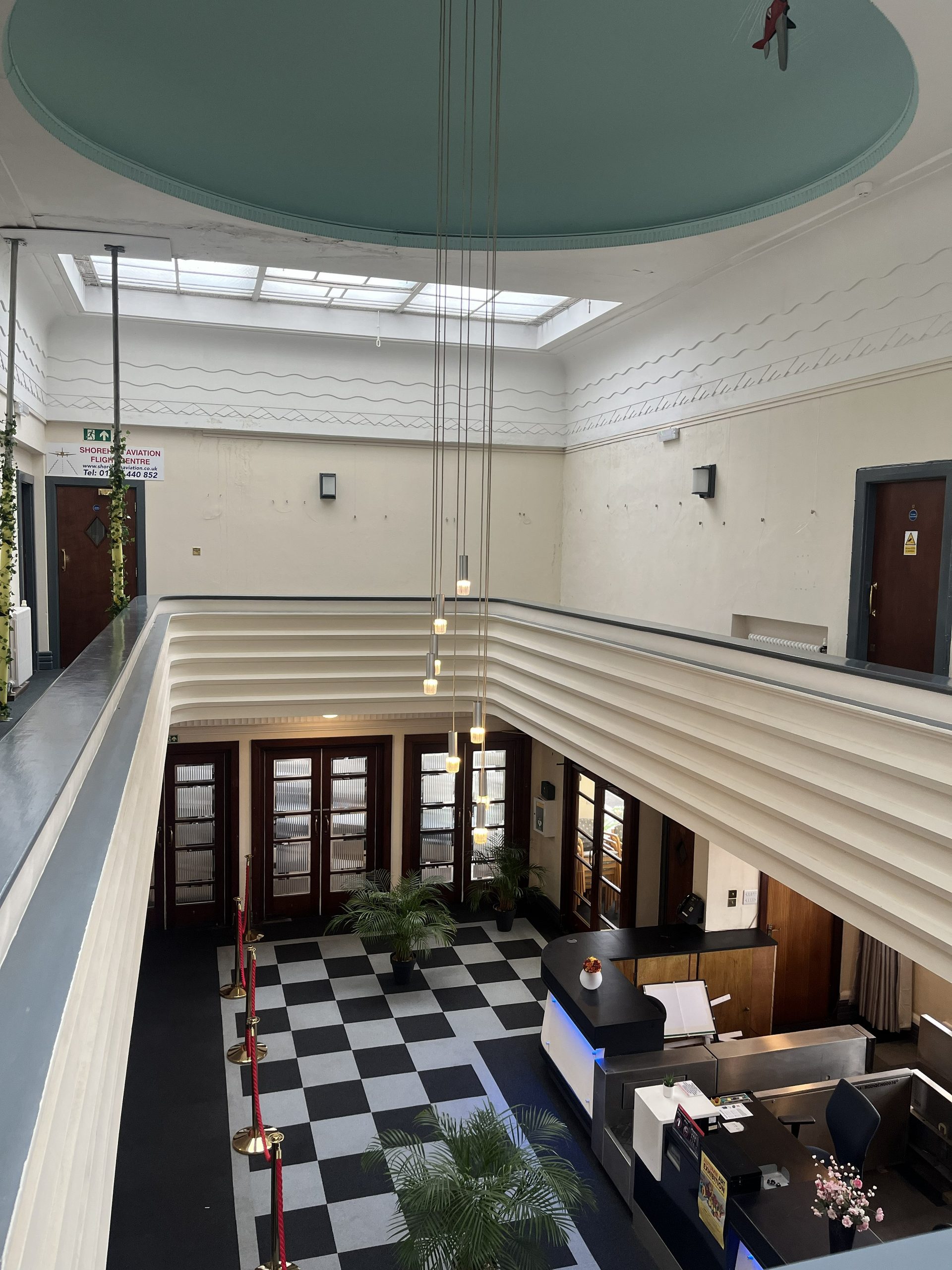
Thursday 3rd September 2026. My 55th birthday is spent exploring Shoreham-on-Sea, West Sussex. Am here mainly to see the Art Deco airport, having been musing on a line that opens one of Douglas Adams’s novels:
It can hardly be a coincidence that no language on Earth has ever produced the expression ‘as pretty as an airport.’
But surely, I thought, some airports are prettier than others. Hence seeking the one at Shoreham, which has been used for Agatha Christie adaptations. It is still operational, but is so small it can only handle helicopters and light aircraft.
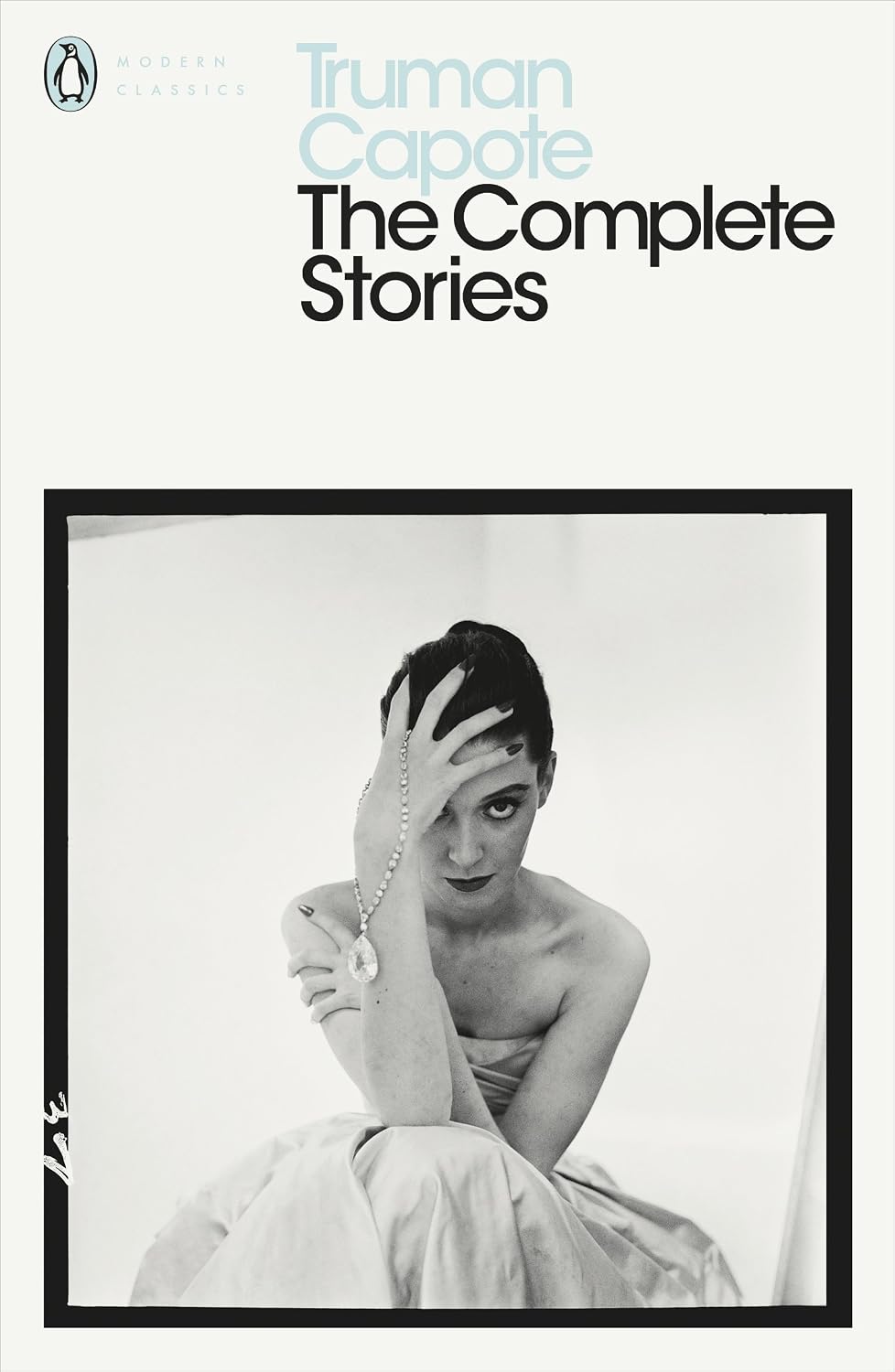
Then to visit the indie bookshop Chapter 34, which is ordered according to its own categories: ‘Dark Matter’, ‘Nostalgic Narratives’, The Self Shelf’. I leave with Percival Everett’s Erasure, Richard Ayoade’s The Unfinished Harauld Hughes, and Truman Capote’s Complete Stories, with its gorgeous Richard Avedon cover.
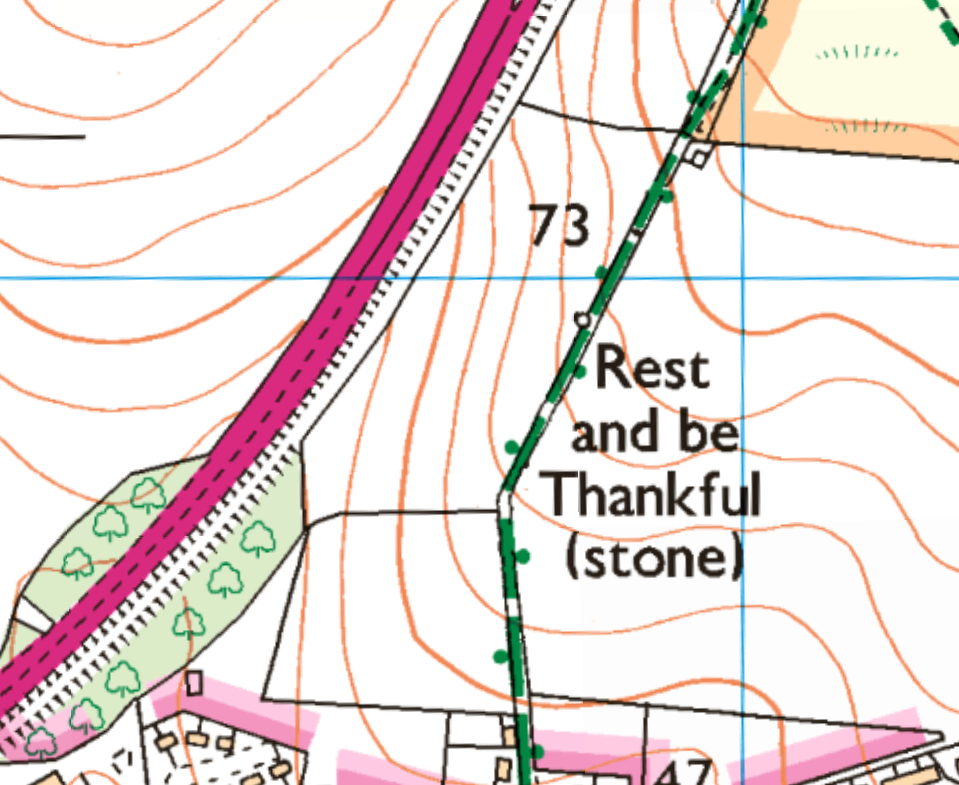
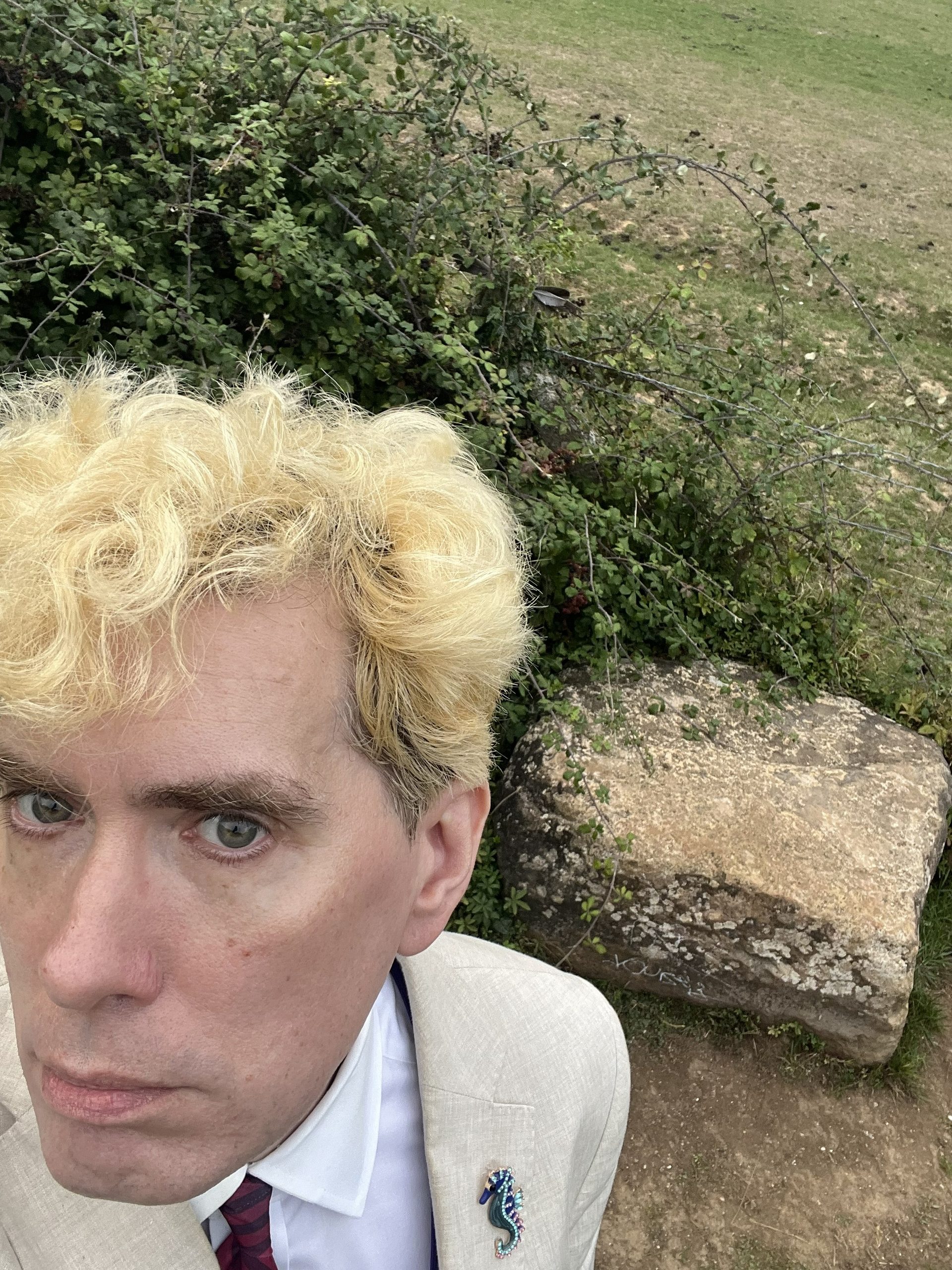
I also seek out the ‘Rest and Be Thankful’ stone, an ancient seat by a footpath, to the north of the Brighton sprawl. I sit on it and am thankful. One can never have too many passive aggressive landmarks.
The local buses have tables on the upper decks, like the ones on trains.
**
Saturday 5th September 2026. To Kings Cross, now described as a ‘lifestyle district’, all bustling and monied and youthful. A man standing by the Wetherspoons bar at St Pancras station shouts “Oh. My. God” as I walk past. Still got it.
At the Kings Place concert hall I witness old friends being successful. The event is a live version of the podcast Chart Music, in which British music journalists discuss an old episode of Top of the Pops.
Sarah Bee, one of the podcast regulars, has put me on the guest list. I have known her for years. We were both zombies in Shaun of the Dead.
I have never listened to the Chart Music podcast myself. I believe, as Noel Coward did with television, that podcasts are for going on, not for listening to. But this one has been going for ten years, and given that the room is packed with 450 paying fans, is evidently a hit.
The other two speakers are Taylor Parkes, whom I used to see regularly when I lived in Highgate, and the host Al Needham, whom I don’t know but who turns out to be big and loud. He is not, I realise, the music journalist Alex Needham, whom I have met, and who is slim and quiet.
When the presenters walk on, the hall erupts into huge cheers, particularly for Taylor. I have always thought of Taylor as a good conversationalist, with his nihilistic wisecracks and friendly intellect. It also helps that he is good looking, in a tortured poet kind of way.
All three presenters have a sheet of notes to consult, which I soon realise is central to the show’s appeal. These are, after all, professional writers used to giving their words a decent amount of care before releasing them into the wild.
More podcasts should be like this: loose but with a good deal of polish and structure, rather than rambling and directionless. The most popular podcast in the world is The Joe Rogan Show, where each episode goes on for three hours. I could never be Joe Rogan. And this is why I will starve.
This live version of Chart Music is broken up with video clips from the Top of the Pops episode in question: November 1985. Cue lots of mullets and rolled-up sleeves. Mr Needham makes Proustian references to 80s school slang, like ‘skill!’ as a synonym for ‘excellent!’.
Taylor describes the TOTP presenter Steve Wright as ‘dressed like a four-year-old who owns a marina’. He goes on to criticise the title of the A-ha song ‘The Sun Always Shines on TV’: ‘pull the curtains, then.’
Talking Heads, meanwhile, ‘give meaningless pretension a bad name’. Some of the audience are a bit shocked at this.
Taylor goes on: ‘I like the early Talking Heads stuff, but after 1983 I can’t deal with their schtick. It’s like: get a proper suit, you c**t.’
There is a moment where Sarah stumbles over her words and makes a strange yodelling noise, not unlike the catchphrase of one particular TOTP presenter.
Sarah: I think I just went the full Jimmy Savile.
Taylor: Not the full Jimmy Savile.
Afterwards, to the nearby Star of Kings pub. I chat with one of the Chart Music fans, Sam V. She says that it’s like belonging to a ‘family’. Underneath all the jokes about bad haircuts and clothes, the fans have bonded through the need to make sense of cultural memory. Nostalgia can be comforting in a wholesome way, when used socially like this. It can give people a reassuring sense of their own life in history.
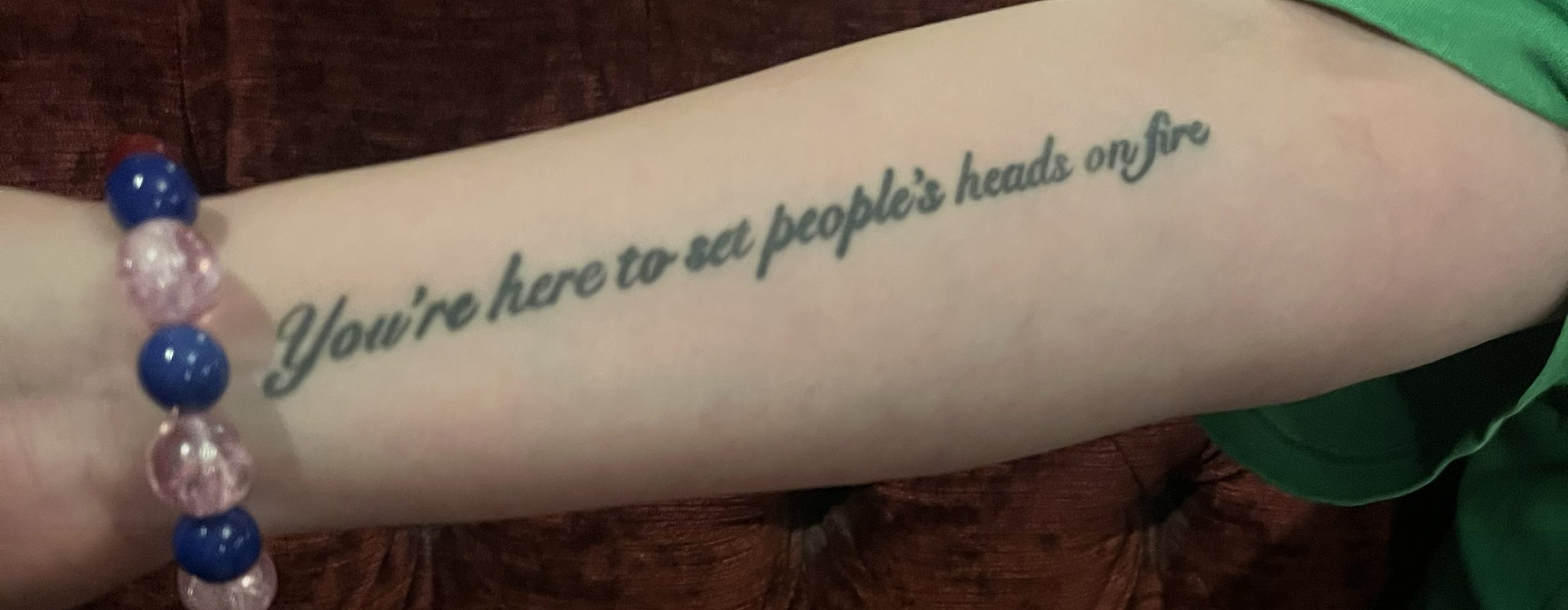
Sam recommends that newcomers to Chart Music should start with ‘any episode with Taylor Parkes and Neil Kulkarni’. Indeed, her love of the podcast extends to a tattoo that emblazons her arm. It is a quotation by Neil K, who died in 2024: ‘You’re here to set people’s heads on fire’.
Sam gets out her phone and shows me the full context of the quote, in an article by Mr K about how to review records. I would say his advice applies to writing about anything:
Accept that everything you say will be forgotten and ignored but write as if you and your words are immortal. Don’t just describe but justify – make sure the reader knows WHY the record exists whether the reasons are righteous or rascally. And always remember you’re not here to give consumer advice or help with people’s filing. You’re here to set people’s heads on fire.
**
Next: I watch a synchronised crowd of Kate Bush impersonators with the man who made the Wuthering Heights video
Notes:
The Douglas Adams quote opens his novel The Long Dark Tea-Time of the Soul.
‘The Neil Kulkarni Guide To Being A Record Reviewer’ was published by the Drowned In Sound website, 13 July 2009.
** This online diary was begun in 1997. It is thought to be the longest running of its kind. The archive contains nearly thirty years of exclusive knowledge, all searchable and free to read without adverts or algorithms or clickbait. It depends entirely on donations by readers to keep it going. Thank you!
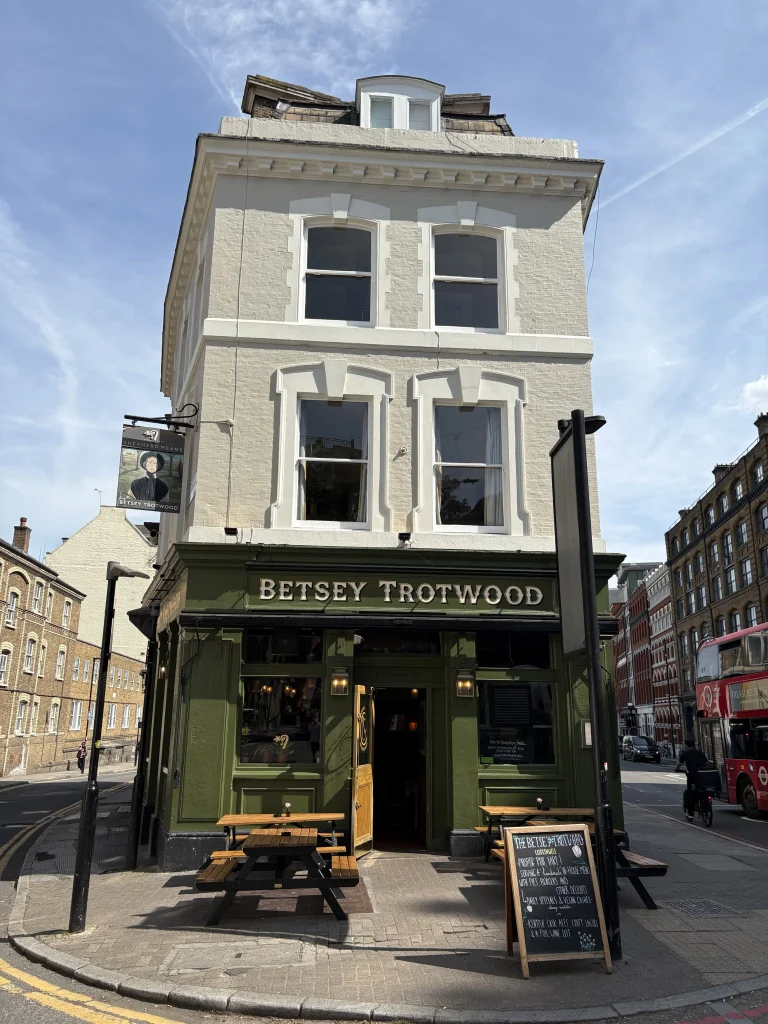
Further recollections from the first ‘On Diaries’ event, held at the Betsey Trotwood on 22nd August 2026.
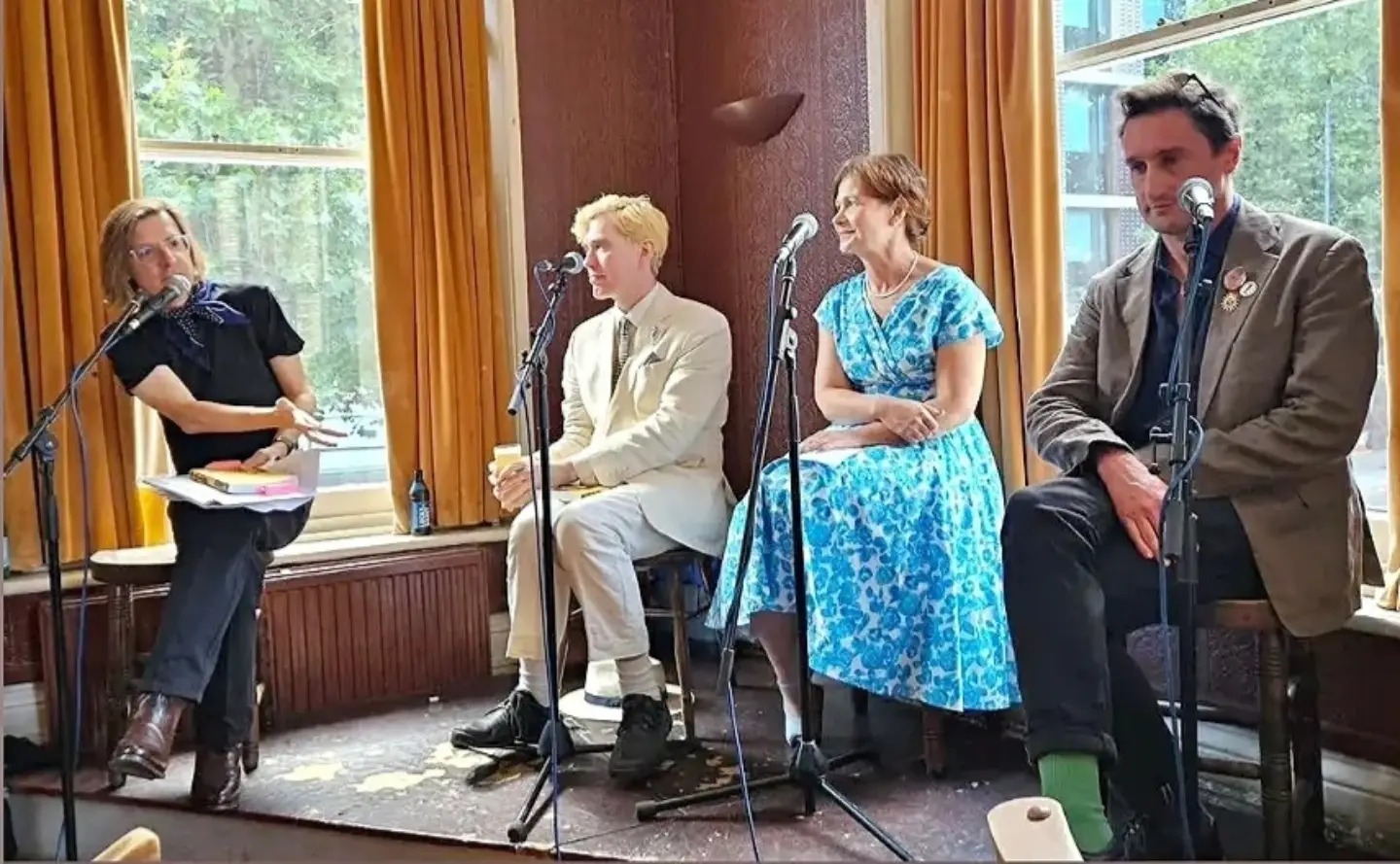
Left to right: Travis Elborough, Dickon Edwards, Victoria Redfern, Robert Wringham
I used to dread public speaking, self-conscious as I was of my strange voice, with its quasi-posh monotone and its lisp. I was sensitive to people mocking me for the way I spoke. But now, as with all people over 50, the mockery is a given: the mockery of the body. So many former anxieties drift away, eclipsed as they are by the gratitude of being alive at all.
I now feel more at home speaking on a stage than I do when not speaking on a stage. I enjoy the process of trying to speak in a polished, quotable manner, as I try to do when writing. It’s a fun thing to live for. And if no one turns up, I can just sit there and work on my phrases. A polished style is its own reward, whether dressing or writing or speaking.
There is a joke among musicians: ‘No tickets sold? Great! Free rehearsal!’
Onstage, I talk about how a good diary shoud record three things: feelings, places, and technology. This leads to Rob W reading an entry by Samuel Pepys, in which Pepys has a boozy night out in seventeenth-century London while becoming addicted to his brand new toy: a pocket watch. Everything is there.
I point out the benefits of reading diary books. Some non-fiction books label themselves as ‘self-help’, or carry the word ‘adventures’ in a subtitle. But all books should be fun and helpful anyway, if they are any good. Any author of anything must leave the reader empowered, or encouraged, or eased, or just entertained.
Diaries are a particularly good way to deal with otherness. This can be the otherness of sickness, or of queerness, or loneliness or simple failure. One example that ticks all those boxes is the diaries of Lou Sullivan, where he deals with being a gay trans man living with AIDS in the late 1980s, as well as being a frustrated author.
The best diaries about sickness include Barbellion’s Journal of a Disappointed Man, Derek Jarman’s Modern Nature, and Virginia Woolf’s A Writer’s Diary, her salve for her mental precarity.
I think of the painter Keith Vaughan, who treated his terminal cancer with an overdose, and wrote his diary up to the very second that he lost consciousness. I once saw his journal on display in a glass case. It was turned to his last words: “It wasn’t such a bad life. I did some good work.” And then the pen drops into a long line down the rest of the page, like a flatlining heartbeat.
In my case in 1997, I was dealing with a rather pettier crisis: the pronounced death of my hopes to be a pop star, with the band Orlando. I didn’t know what to do with myself, so I started a diary.
Writing is a need, but publishing is a risk. Putting one’s life online risks looking deluded or narcissistic, or just adding to the amount of irritation in the world.
Nevertheless, it is the same sentiment as writing graffiti, or taking a photo, or sending a message, or posting on social media. All these activities are saying the same thing: ‘I too am alive.’
Then, when faced with age or imminent death or just the feeling that the world has closed its doors on you, it becomes the need to say: ‘I too was once alive’.
For me, this urge was so strong in 1997 that I couldn’t wait for blogging platforms to be invented. I had to post the first entries in raw HTML code. It felt like the Puritans at Plymouth Rock. That thrilling new world, that fresh blank space of sanctuary, the 1990s web.
Back then, normal people scoffed at the internet. They called it a kind of CB radio for lonely misfits who couldn’t get a proper publisher or a record deal. That was of course what we liked about it. Good, we misfits thought. Leave us our sanctuary.
Then in the 2000s, normal people joined the internet. And ruined it. I am now a lone, peculiar, crumbling old chapel in a city of identical skyscrapers. But I too am alive.
The problem with social media is not only being at the mercy of dubious private companies, who can delete your post or even your whole account without warning. The true problem is that many people waste their chance to say something different. They have the power to get a message out to the whole world at once, something that was dreamed of by their ancestors.
And yet nearly always this message is the same: ‘Here is my cat. Here is my breakfast. Here is my bottom’. The breakfast one is the least excusable.
So in a time of widespread narcissism it is important to practice wholesome narcissism. Putting this desperation to be liked to good use. Hence my mission to get people to think about diaries. Writing a diary, whether online or on paper, offers far more control and is much better for the mind.
Memoirs are hampered by structure, but anything goes with a diary book. Much of Volume One is meant to entertain, but there is some sadness there too. In the final entry there is a scene in a late night takeaway where I am first mocked then physically assaulted. You will have to buy the book to learn what I did in response, but suffice it to say that unlike Phil Spector I did not pull out a gun.
At the Betsey Trotwood, Rob Wringham, who is not just one of the performers but is also the book’s publisher & editor, is asked why he chose to end with that entry:
‘I wanted people to know what it costs to be Dickon Edwards.’
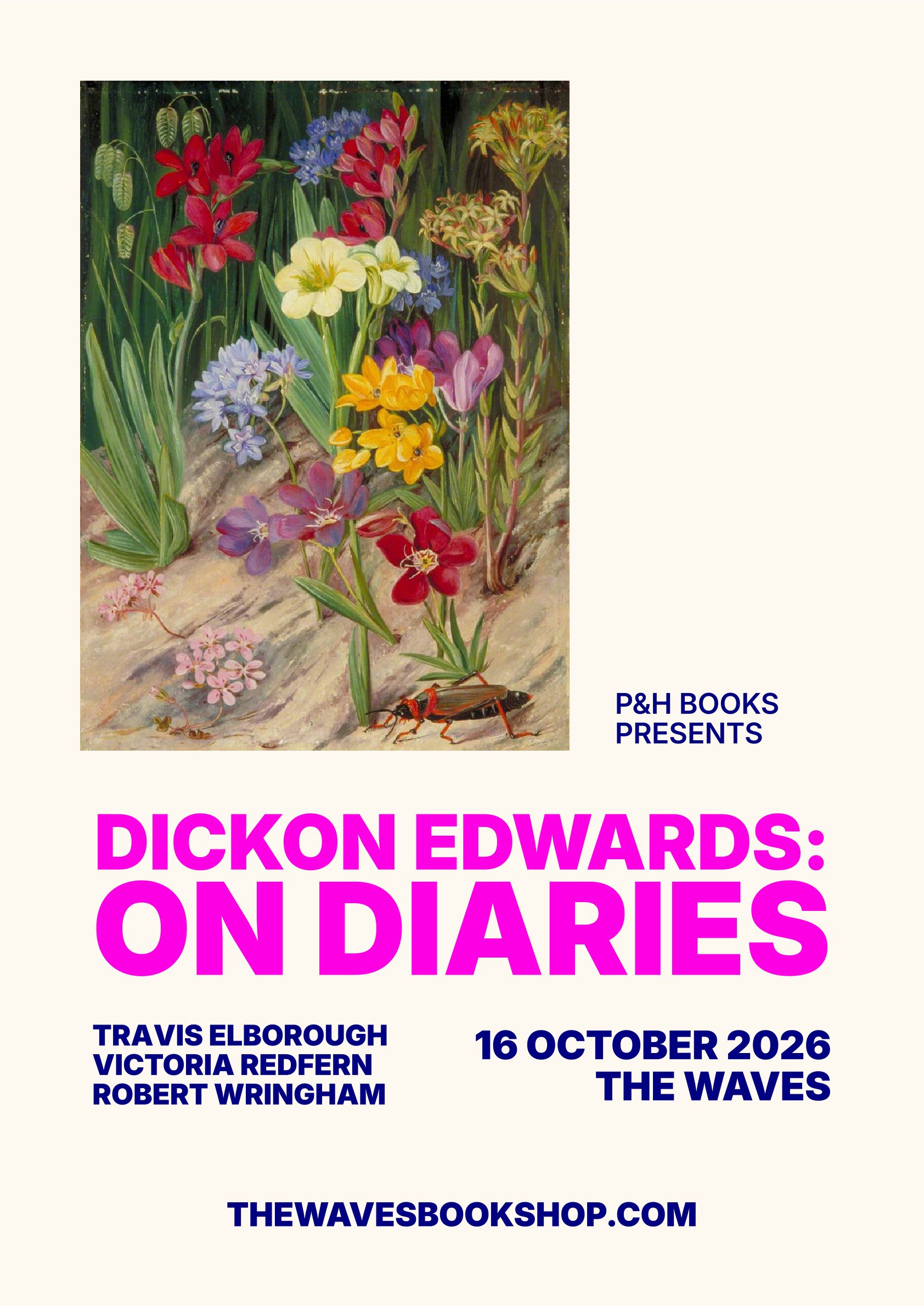
The next show is in Hastings, at the Waves Bookshop, on Friday 16th October, 6.30pm. Free but places must be reserved on Eventbrite (link).
Next: I return to London to discover that old writer friends have become podcast superstars.
**
A paid subscription to my Substack, Svelte Lectures (link), grants you access to many exclusive articles, all of whichare intended to leave you feeling better off. There are pieces on Shakespeare and flowers, Heartstopper and the Carry On films, Christopher Nolan’s homoerotica, Angela Carter meets the Beatles, and the dandyism of Muriel Spark.
** This online diary was begun in 1997. It is thought to be the longest running of its kind. The archive contains nearly thirty years of exclusive knowledge, all searchable and free to read without adverts or algorithms or clickbait. It depends entirely on donations by readers to keep it going. Thank you!
Saturday 22nd August 2026. To the Betsey Trotwood in Farringdon, London, for the first outing of the Dickon Edwards Diary Show.
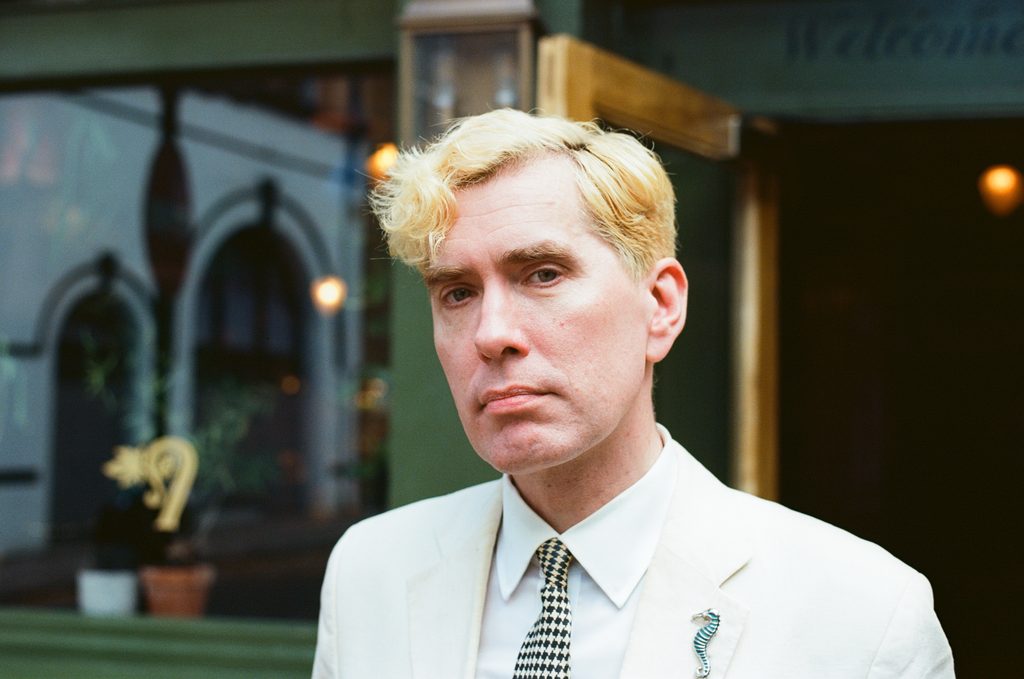
Dickon Edwards, London, 22 Aug 2026. Photo by Travis Elborough.
Rather than have a straightforward launch-style event at which to sell the slightly improved second edition of my book (Diary at the Centre of the Earth Vol 1, 1997-2007), I devised a salon about diaries as a whole, with my book as one of several examples. For this first outing in London, I added my own selections from the diaries of Virginia Woolf, Samuel Pepys, Derek Jarman, and Helen Garner.
Svelte Lectures is a reader-supported publication. To receive new posts and support my work, consider becoming a free or paid subscriber.
As well as myself onstage, there was a host to ask me questions (Travis Elborough), two actor friends reading (Victoria Redfern as Woolf and Garner, Rob Wringham as Pepys and Jarman), plus three DJ friends to provide a suitable ambience before and after the performance (Shanthi Sivanesan, Ian Watson, Alex Mayor).
Alex M later said that this format was ‘Like BBC Four, but in a room’.
I was going to call the event ‘Club Dickon’, but Victoria R said that sounded like an invitation to have me bludgeoned.
As it turned out, the event was something between Dickon Edwards, This is Your Life and an early birthday party, given I was about to turn 55. I rarely have actual birthday parties, and will tell you about what I did do on my birthday on the 3rd September in a subsequent instalment.
But at the Betsey event I was delighted to reunite with unexpected people from across different chapters of my history, all of whom I hadn’t seen for some time. These included Rachel Stevenson, of my band Fosca, whom I first met at indiepop gigs in the early 1990s, and Professor Joseph Brooker, of Birkbeck University, who co-supervised my PhD thesis from 2017 to 2022.
Travis E secured the venue for us. The Betsey Trotwood was perfect: the site of indiepop club nights in the past like Track & Field. But architectually appropriate too: a colourful and ornate survivor of London past, a sign of independent humanity on a traffic island amid the harsh corporate buildings that speckle the Farringdon Road, not least the UK headquarters of Linkedin.
This area of London is Dickens country, with Saffron Hill from Oliver Twist around the corner, and Betsey Trotwood herself a Dickens character. How apt, then, to have the LinkedIn building glowering at the Betsey from across the road; LinkedIn, that unlovely employment website where human beings are forced to jump through digital hoops against their will in order to prevent poverty. The current incarnation, in fact, of the Dickens workhouse.
I do not know the Betsey’s manager, Patrick, but in an email to Travis he said he ‘knew Dickon’s late brother Tom very well’, and so was happy to let us use the venue.
I am rather touched by this, and so is my mother when I tell her on the phone. I talk to Mum about my improving confidence in public speaking. She adds that when were were both small children, it was me who was more keen on performing than Tom. In the primary school nativity play, I demanded to be made Head Angel. I can still remember the dance moves. And I remember that I was the only boy angel, too; all the others were girls.
Tom, on the other hand, was so reluctant to go on stage that the school had to find him the least prominent role possible. Mum says, ‘In the end they made him a non-speaking camel.’
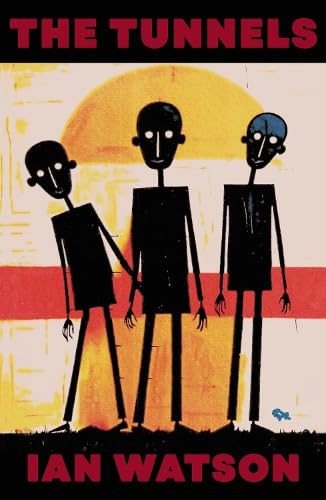
At the Betsey, Ian Watson thanks me for a particular diary quote I had passed on. He says he found it useful when he was struggling to write his comic novel, The Tunnels, which has just come out.
The quote is from the diary of Christopher Isherwood, and is a good tip for writer’s block:
Every day I get some more of the book done. It’s hopeless, almost incoherent, but that doesn’t matter; one NEVER regrets writing anything. The jungle is being cleared. – Christopher Isherwood, diary, 6 Jan 1974.
I recommend Ian’s book The Tunnels, by the way: by far my favourite novel to feature Boney M references and grumpy minotaurs.
As the event begins, Shanthi plays ‘He’s a Rebel’, the 1960s hit by The Crystals, produced by Phil Spector. It is her affectionate reference to me. I have not really thought of myself as a rebel. But I suppose I must be by default, in a weird and soft sort of way. I recall how the main biography about Phil Spector is also titled He’s a Rebel, and how Spector spoke with a lisp, like me. When people mocked the way Spector spoke, he would pull a gun on them. This same reflex eventually led to him being jailed for murder. That’s where I hope, at least, that my rebel aspect diverges.
I wonder if I can count as a cosy rebel? The biggest book trend right now is for ‘cosy crime’. Murder mysteries in comforting English settings, usually by an author called Richard. There is Richard Osman from the cosy BBC show Pointless, andRichard Coles, the Communards musician turned cosy BBC vicar. The trend may partially be the fault of Richard Curtis, of Love Actually and Four Weddings, whose name has been associated with fictional English cosiness for some time.
I too am a Richard (my official name), so by rights I should try writing a cosy English novel. I certainly enjoy afternoon tea and avoiding swearwords.
At the Betsey I tell Ian Watson, who is a veteran music journalist, that perhaps I could draw on my background of 1990s indiepop for a cosy crime story. Murder in the Kentish Town Bull and Gate! At midnight, found dead in a pool of cider and black: the editor of a weekly music paper!
Ian says there’d be too many suspects.
To be continued…
Appeal: My total earnings for last month were under £100. Hastings Job Centre say they do not have anything for someone with my ‘high end qualifications’, as they put it. So please do take out a paid Substack subscription or donate to the diary site if you can. A paid subscription gives you access to all the carefully polished Svelte Lecture posts from the past, but more importantly it is a direct means of proving that you think my work is enjoyable, and that it should continue. And indeed, that I should continue. Thank you!
** This online diary was begun in 1997. It is thought to be the longest running of its kind. The archive contains nearly thirty years of exclusive knowledge, all searchable and free to read without adverts or algorithms or clickbait. It depends entirely on donations by readers to keep it going. Thank you!